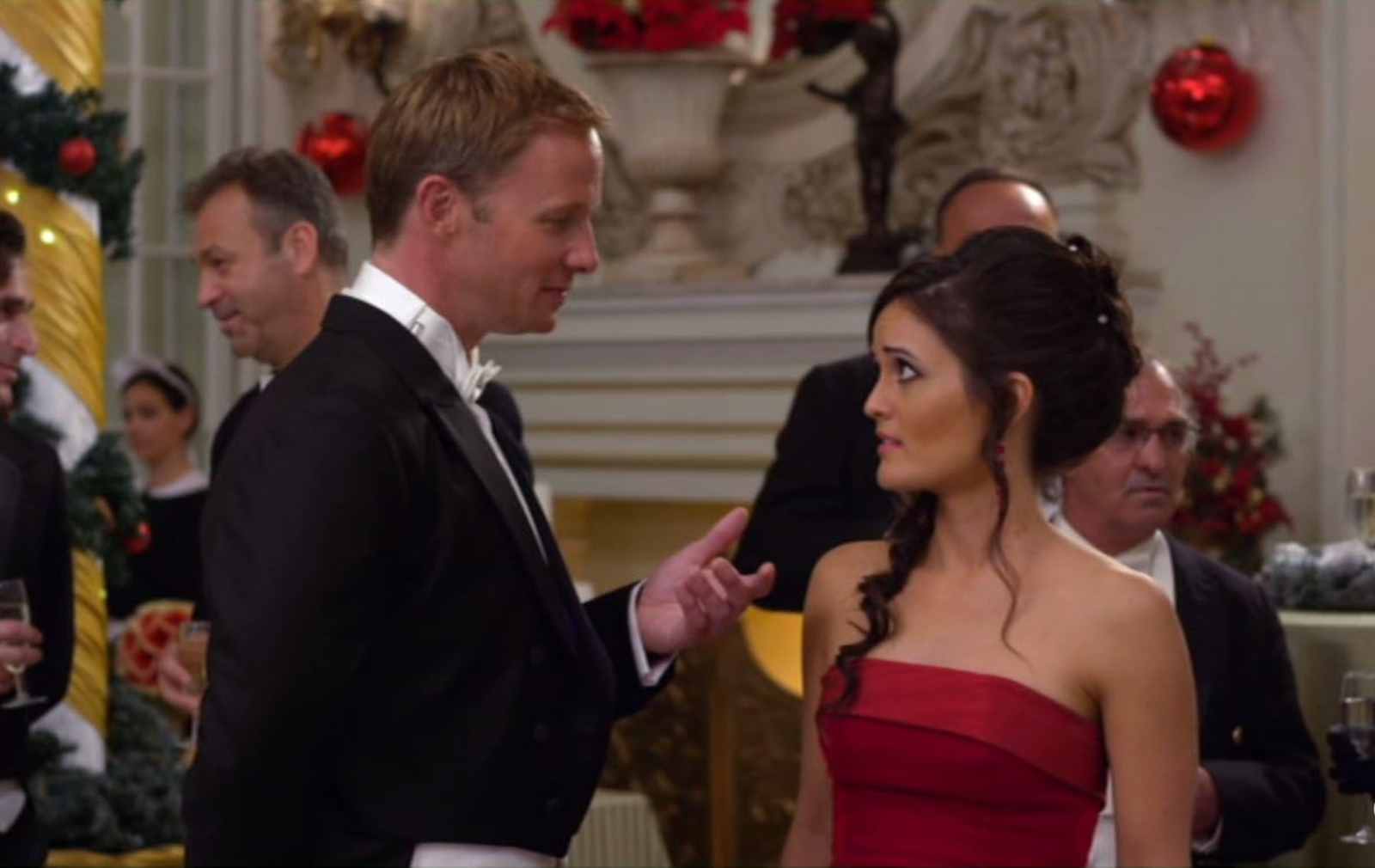
There’s a reason Hallmark fans keep circling back to Crown for Christmas—and it isn’t just the castle, the gowns, or the holiday glow. It’s the ballroom/dance moment, the scene where everything shifts without the movie needing to shout about it.
Up until that point, the story is built on rules:
-
Allie is the governess—temporary, replaceable, and constantly being reminded of her “place.”
-
Max is the king—measured, guarded, and trapped inside expectations.
-
The castle isn’t a home; it’s a system, and systems don’t usually allow romance.
Then the ball happens, and suddenly… the movie stops being “a job in a palace” and becomes something else entirely.
Why the Dance Scene Hits So Hard
Hallmark does this well when it wants to: a scene where romance isn’t declared—it’s discovered.
The ballroom isn’t just a pretty setting. Symbolically, it’s the one place where:
-
public image matters most,
-
behavior is heavily judged,
-
and “duty” is supposed to win.
So when Max chooses to dance with Allie (and when Allie accepts), it’s not just flirting. It’s a subtle act of rebellion.
A dance is intimate, but it’s also visible. That’s what makes it powerful:
-
If Max were only curious about Allie, he’d keep his distance.
-
If Allie were only being polite, she’d look uncomfortable the entire time.
-
But the scene is staged like the moment both realize: this is no longer professional.
A lot of fans describe it as the first time the film lets Max be human instead of royal—because dancing forces him out of his “king posture” and into something personal.
The Real Shift: It’s Not the Steps — It’s the LOOKS
The most viral thing you can pull from this scene isn’t “they danced.” It’s
