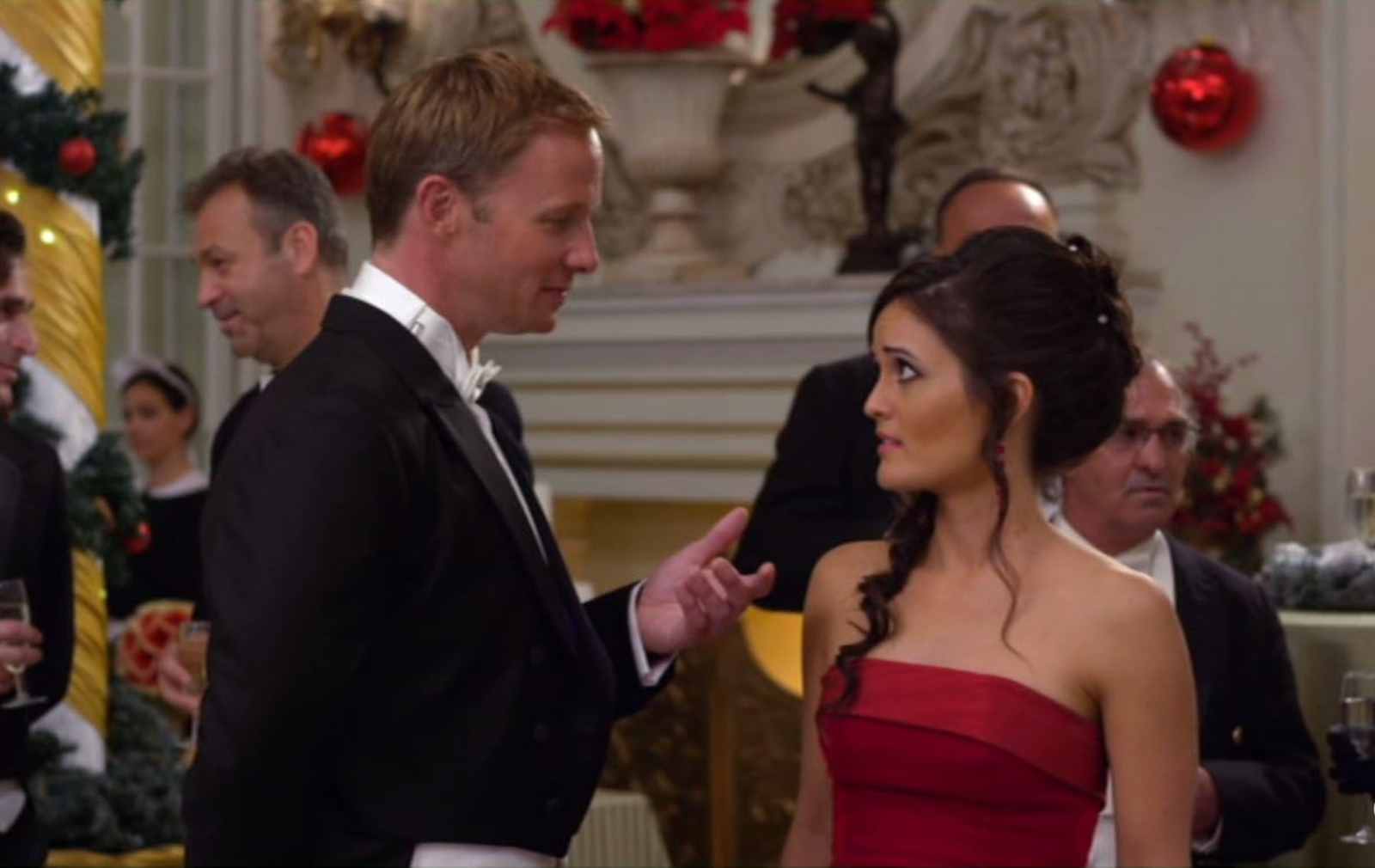
how they look at each other during it.
This is the turning point where:
-
Max stops reacting to Allie like a staff member.
-
Allie stops acting like she’s just trying to survive the job.
-
The room fades, the rules fade, and the power dynamic softens.
It’s the Hallmark version of: “Oh… I’m in trouble.”
And the best part? The movie doesn’t explain it with dialogue. It lets the audience do the emotional math—which is exactly why people rewatch it.
Why This Moment Feels Bigger Than the Rest of the Movie
In most “royal romance” stories, the relationship progresses in predictable beats:
-
Meet-cute / clash
-
Forced proximity
-
Softening
-
Big romantic reveal
Crown for Christmas follows that blueprint, but the ballroom scene is where it upgrades from “cute” to memorable.
Because this is the first time the romance becomes:
-
undeniable to the audience,
-
risky for the characters,
-
and dangerous for the social order of the castle.
The ball is where the stakes go public.
The Unspoken Tension: Allie Is “Not Supposed” to Be There
This is what makes the scene so comment-worthy in a Facebook group:
Allie’s presence in the ballroom feels like a disruption. Even when she’s dressed perfectly, she doesn’t fully “belong” in their world—at least not according to the people who live by hierarchy.
That tension is the oxygen of the scene. It creates the feeling that:
-
anyone could interrupt,
-
someone will judge,
-
and the romance could be shut down at any moment.
That’s why Lady Celia’s reactions (and the general room energy) matter so much—because the dance isn’t happening in private. It’s happening in a space designed to enforce status. (You can even see fan recaps pointing out how the room reacts to her entrance and the dance dynamics.)
Max’s “Duty” vs Max’s “Choice”
This is the first real moment where Max makes a decision that looks like choice instead of obligation.
Earlier, he often seems like he’s doing what a king should do:
-
keeping distance,
-
maintaining discipline,
-
protecting the image of the crown.
But a dance is optional.
And because it’s optional, it reads like:
“I’m choosing you… even if I’m not ready to admit it.”
That’s the
