Most Hallmark romances win you over with big gestures: a dance, a confession, a snow-kiss, a grand “choose love” moment.
But Crown for Christmas does something sneakier — and honestly, stronger.
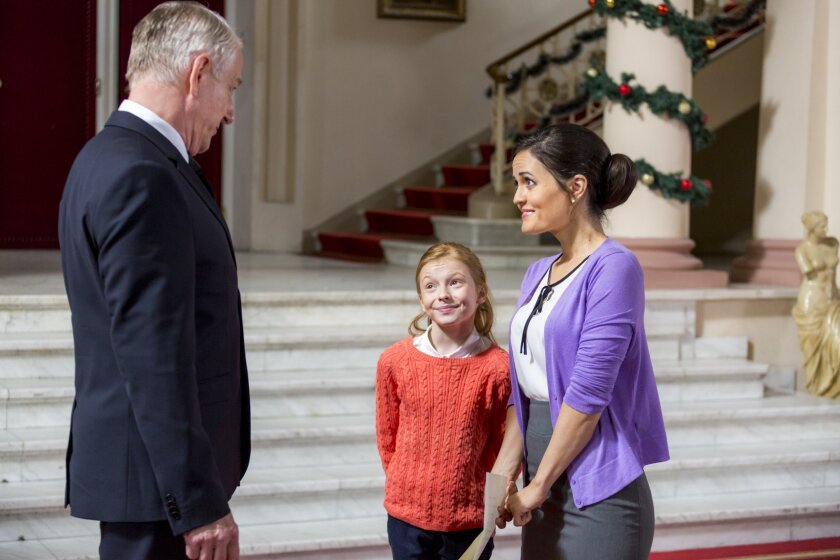
It makes you fall in love with the story because of the calm, steady, mom-energy way Allie handles Princess Theodora: patience without being weak, boundaries without being cold, warmth without needing applause.
And once you notice it, you can’t unsee it — because it’s the exact thing that turns a cold palace into a home.
Hallmark’s own “About” description basically sets up the emotional problem from the start: Theodora has been “terrorizing authority figures,” and it has gotten worse since her mother’s death.
So the question isn’t “Can Allie teach etiquette?”
It’s “Can Allie make a grieving kid feel safe again?”
1) Allie doesn’t fight for control — she fights for connection
The palace is full of adults trying to manage Theodora. Rules. Image. Reputation. “Proper behavior.”
Allie shows up and does the opposite:
-
She doesn’t try to dominate Theodora.
-
She doesn’t take the bait when Theodora tests her.
-
She stays emotionally steady — which is basically a superpower when a kid is pushing boundaries.
That’s classic “mom energy.” Not loud. Not dramatic. Just consistent.
Because when a kid is grieving, a lot of the “bad behavior” is really just a question in disguise:
“Are you going to leave too?”
Allie answers that question the only way a child believes: with repetition, presence, and calm.
2) She uses routines like a safety blanket
The phrase “mom energy” fits Allie because she brings something royal life is missing: normal routines.
In a palace, everything is formal and scheduled — but it’s not comforting. It’s performative.
Allie’s routines are different:
-
predictable,
-
gentle,
-
and meant to make Theodora feel secure instead of supervised.
That’s why the crafting/decorating scenes hit so hard. They’re not “holiday filler.” They’re relationship-building.
You can literally see Allie and Theodora doing hands-on holiday crafts together — not as a royal duty, but as a bonding ritual.
That’s the kind of “small normal” moment that makes a kid exhale.
3) She corrects Theodora without humiliating her
One of the most underrated parenting skills is: protecting a child’s dignity while still holding boundaries.
Allie does this constantly.
When Theodora acts out, Allie doesn’t shame her in front of the staff. She doesn’t “report” her like a problem. She handles it like a person with feelings.
And that’s why Theodora bonds with her faster than anyone else — because Allie doesn’t treat her like a naughty princess. She treats her like a kid who’s hurting.
