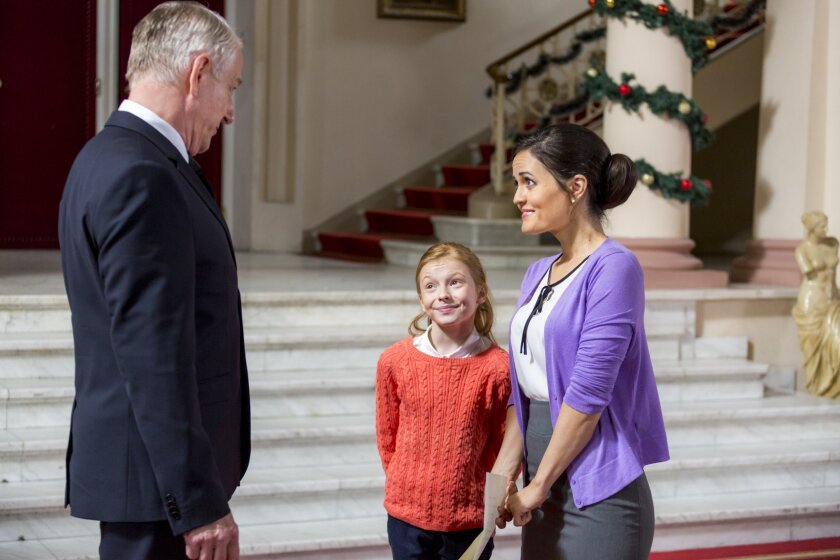
4) She understands what the palace refuses to admit: grief is the main character
Hallmark’s plot setup makes it clear: Theodora’s behavior changed after her mother died.
So Allie is basically stepping into a family still living inside grief — and she doesn’t try to “fix” grief with discipline.
She acknowledges it, respects it, and works around it with patience.
Even the funny early chaos (like the whole “ornament” mishap) becomes part of why Allie works: she doesn’t panic or turn it into a power struggle — she keeps moving forward and stays human.
That’s what makes her feel like a real caretaker: she can handle mess without making the kid feel like the mess.
5) Her “mom energy” is what makes Max fall, not just her looks
The romance spark is there (Hallmark says a spark forms between Allie and Max), but the reason Max truly shifts is deeper: he watches Allie bring his daughter back to life.
When a parent sees someone:
-
calm their child,
-
earn their trust,
-
create joy where there’s been tension…
That’s not “cute.” That’s life-changing.
Allie’s quiet competence becomes romantic because it’s rare in that world. She doesn’t chase status — she creates stability. And stability is attractive.
6) The crown-on-the-tree moment is a perfect symbol of her parenting style
There’s a reason fans obsess over the Christmas scenes: they’re where you see Allie’s values in action.
The crown-tree incident (and the palace reaction to it) is basically the movie’s theme in one moment: joy vs. rules, warmth vs. image, childlike healing vs. stiff tradition.
Allie doesn’t treat Theodora’s holiday spirit like a nuisance. She protects it.
And that’s why it feels like “mom energy” — because it’s not about running a palace. It’s about protecting a child’s heart.
