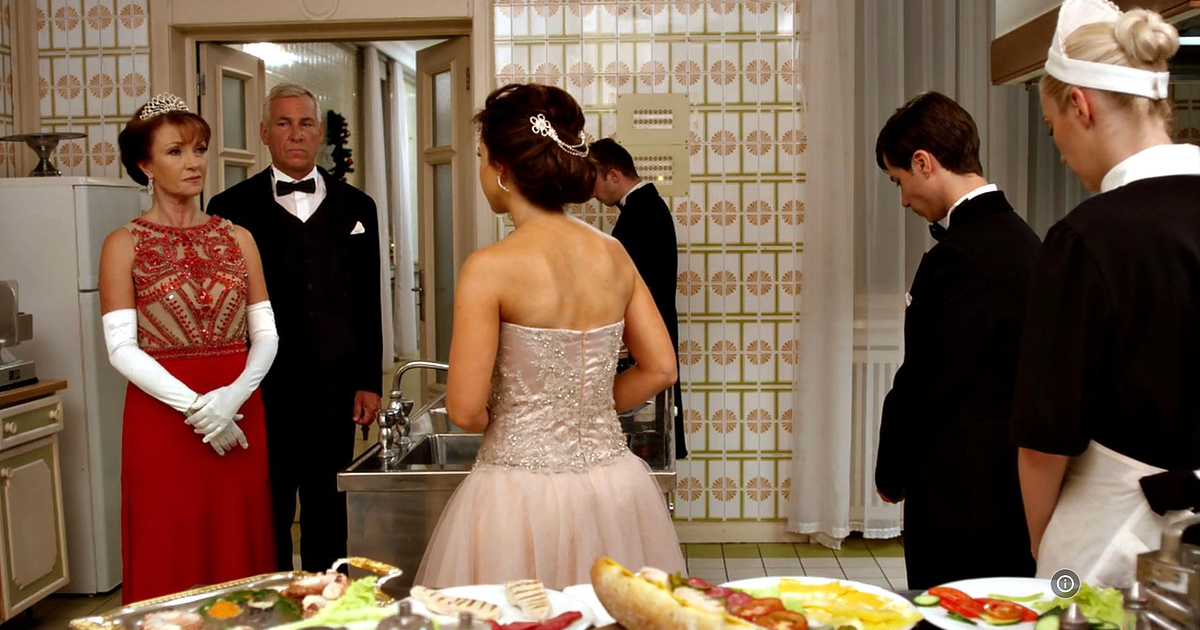
A Royal Christmas isn’t just a romance. It’s a polite war.
Yes, the story has snow, castles, and holiday sparkle—but the emotional engine is the tension between Emily and the Queen. Because the Queen isn’t a “villain” in the loud, cartoon way. She’s worse (for drama): she’s controlled, strategic, and convinced she’s right.
And that’s why the movie is rewatchable.
Emily’s challenge isn’t simply “fit in.” Her challenge is something deeper: to prove she’s not a temporary phase Leopold will outgrow. In royal stories, the Queen often represents the crown’s real power—the force that can turn love into a scandal with one sentence. And the Queen’s resistance works because it’s wrapped in etiquette. It’s not yelling. It’s judging. It’s the kind of coldness that makes every dinner table scene feel like a test.
What makes this dynamic pop is that Emily doesn’t defeat the Queen by becoming a perfect royal. She defeats her by refusing to lose her identity. That’s the secret satisfaction of the movie: the Queen expects Emily to collapse under pressure, to beg, to apologize for existing in royal space. Instead, Emily continues to show up—respectful, yes, but not erased.
This is where Hallmark is at its best: conflict that feels “safe” to watch but emotionally sharp enough to feel real. The Queen becomes a symbol of every gatekeeper who says, “You don’t belong here.” Emily becomes the fantasy of answering that pressure with quiet strength instead of desperation.
And Leopold? He’s caught between duty and
