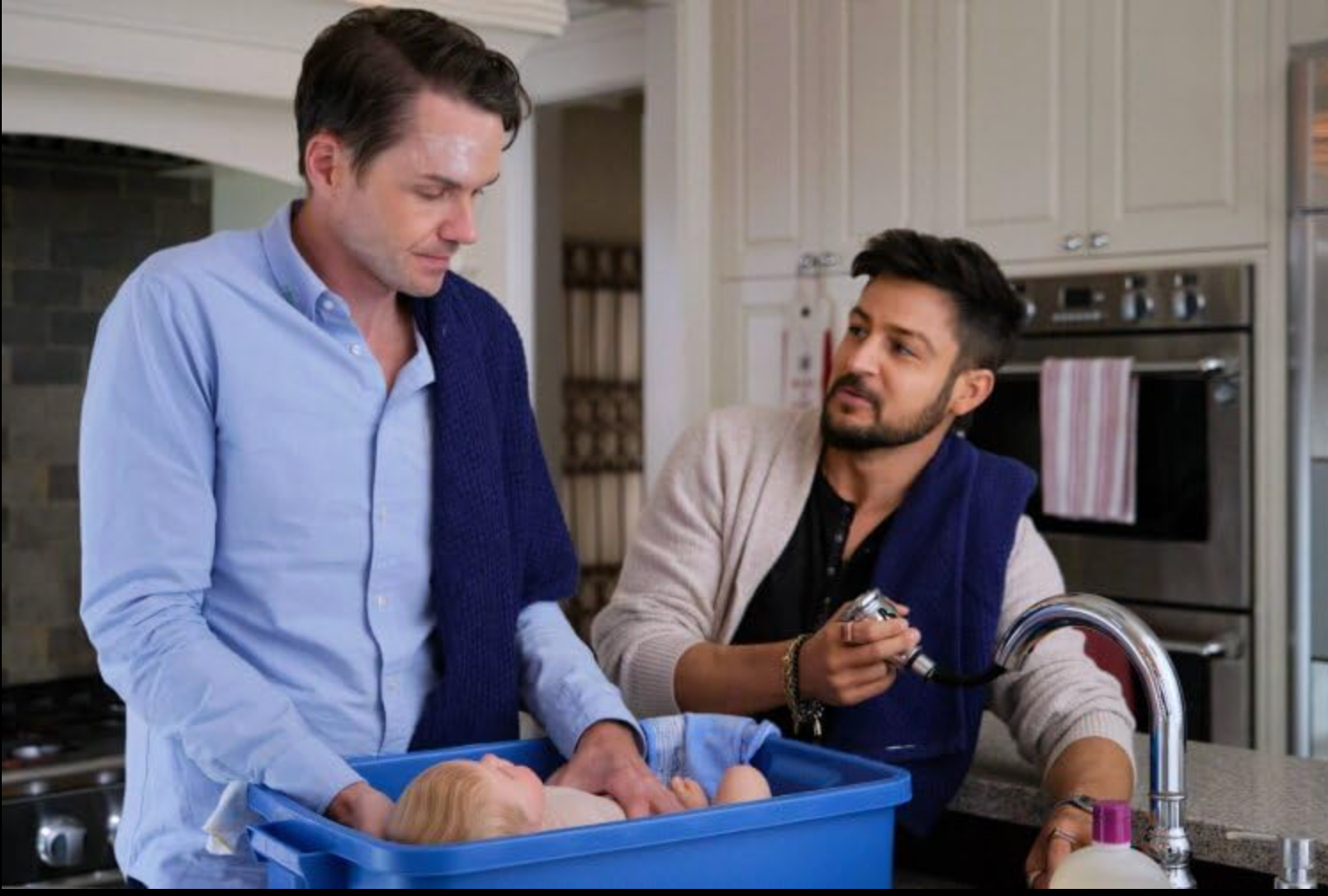
What’s striking about this scene is how little it tries to explain itself. There’s no lesson being delivered. No character announcing growth.
Instead, the movie lets the image do the work: two men, sleeves rolled up, learning through action. Their expressions aren’t comedic or exaggerated—they’re attentive, slightly cautious, and quietly confident.
The film doesn’t frame this as exceptional behavior. It frames it as normal. And that normalization is the point.
The Absence of Humor Is the Statement
For a holiday film that uses humor generously elsewhere, this moment is almost conspicuously serious. Not heavy—but sincere.
There’s no punchline attached to the baby bath. No embarrassment beat. The restraint signals respect—for the characters, for the responsibility, and for the audience.
It’s a small but meaningful decision that grounds the story.
A Scene That Recontextualizes Everything
When viewers look back on Three Wise Men and a Baby, scenes like this often gain importance in hindsight. They explain why the ending feels earned. Why the transformation doesn’t feel rushed.
This is where the premise stops being a setup and becomes a lived reality.
Not through declarations.
Not through grand gestures.
But through a quiet moment at a sink, where responsibility has stopped being theoretical and started being habitual.
