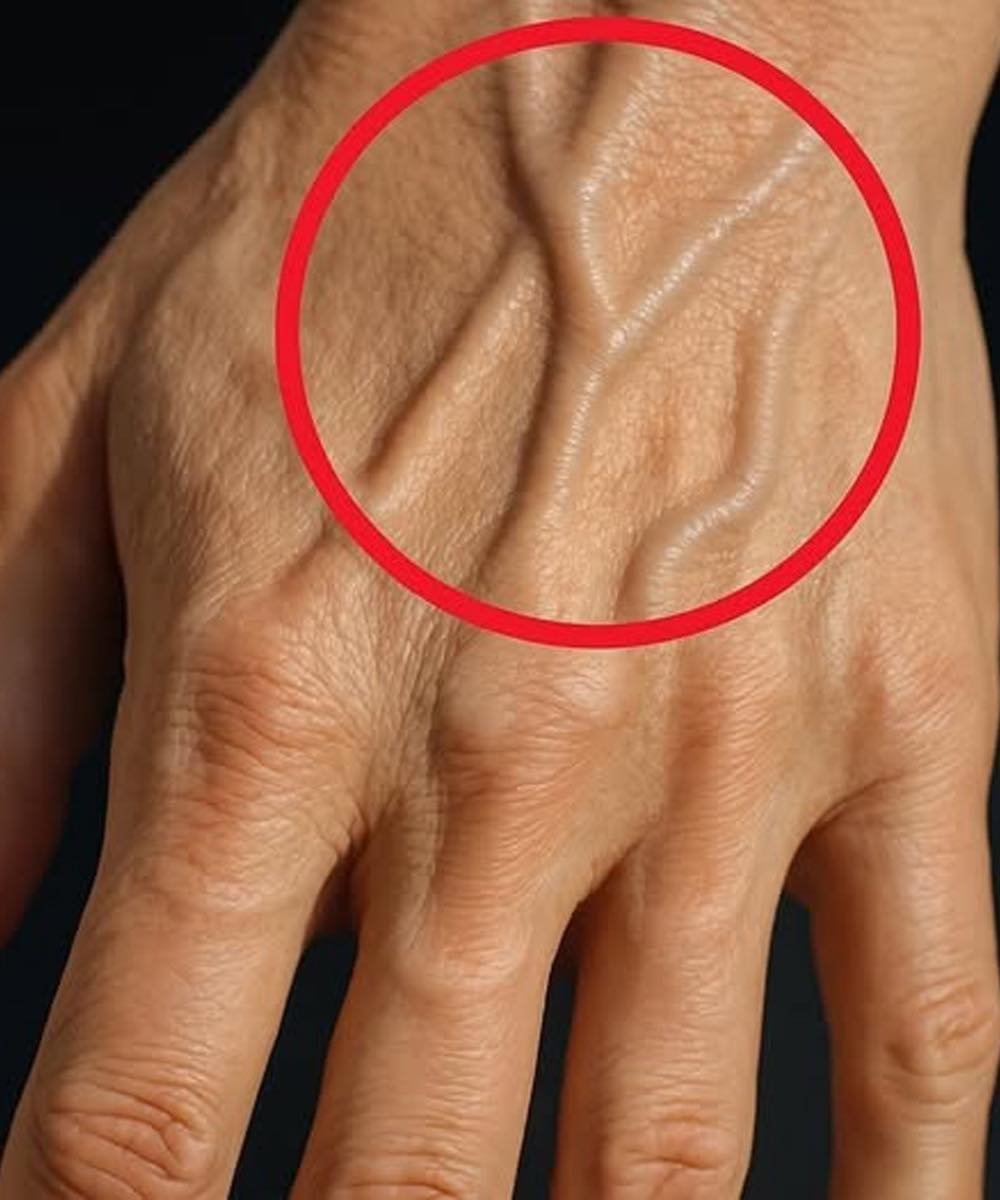
When looking at your hands and noticing prominent, raised, or bluish veins, it’s natural to wonder if they’re a sign of something about your overall health. Some online sources suggest that visible veins on the hands could reveal hidden kidney problems. But how true is this statement?
Let’s explore what science really says about visible veins and what they may (or may not) reveal about the health of your kidneys.
Understanding why the veins in the hands become visible
In most cases, visible veins on the hands are completely normal. Veins may be more visible due to:
Aging (the skin becomes thinner and loses collagen)
Low body fat
Genetics
Exercise
Exposure to heat
Dehydration
As the skin thins and the underlying fat layer decreases, the veins become more visible. This is especially common in older adults and people with thin builds.
Visible veins alone are not a recognized sign of kidney disease.
How kidney disease actually affects the body
Kidney disease primarily affects the body’s ability to:
Filter waste from the blood
Regulate fluid balance
Control blood pressure
Maintain electrolyte levels
In conditions such as chronic kidney disease, symptoms usually develop gradually and may include:
Swelling in the hands, feet, or face (edema)
Fatigue
Changes in urination
Foaming urine (protein in urine)
Hypertension
Nausea or loss of appetite
Please note that prominent veins are not on this list.
The role of fluid balance
The kidneys play a fundamental role in regulating fluids. When they do not function properly, the body can retain fluid. This usually causes swelling, not more visible veins.
In fact:
Swollen hands can make veins appear less visible.
Dehydration, on the other hand, can make veins look more prominent.
Mild dehydration reduces plasma volume, causing veins to become temporarily noticeable. While severe or repeated dehydration can overload the kidneys, the presence of visible veins alone does not indicate kidney damage.
